
Insulation that gets installed the way it was tested.
Spray foam, blown and batt fiberglass, cellulose and fireproofing — for existing homes, custom builds and commercial buildings across Rhode Island, Massachusetts and Connecticut.
The right product for the assembly
There's no single best insulation — there's the one that suits the cavity, the moisture load and the budget. We're Owens Corning® Certified Energy Experts®, and we only hang products from manufacturers who stand behind them.
| Product | Where it goes | What it's good at | Typical R |
|---|---|---|---|
| Blown fiberglass | Open attic floors, top-ups over existing | Depth cheaply and evenly; easy to add to later; fills around framing | R-49 – R-60 |
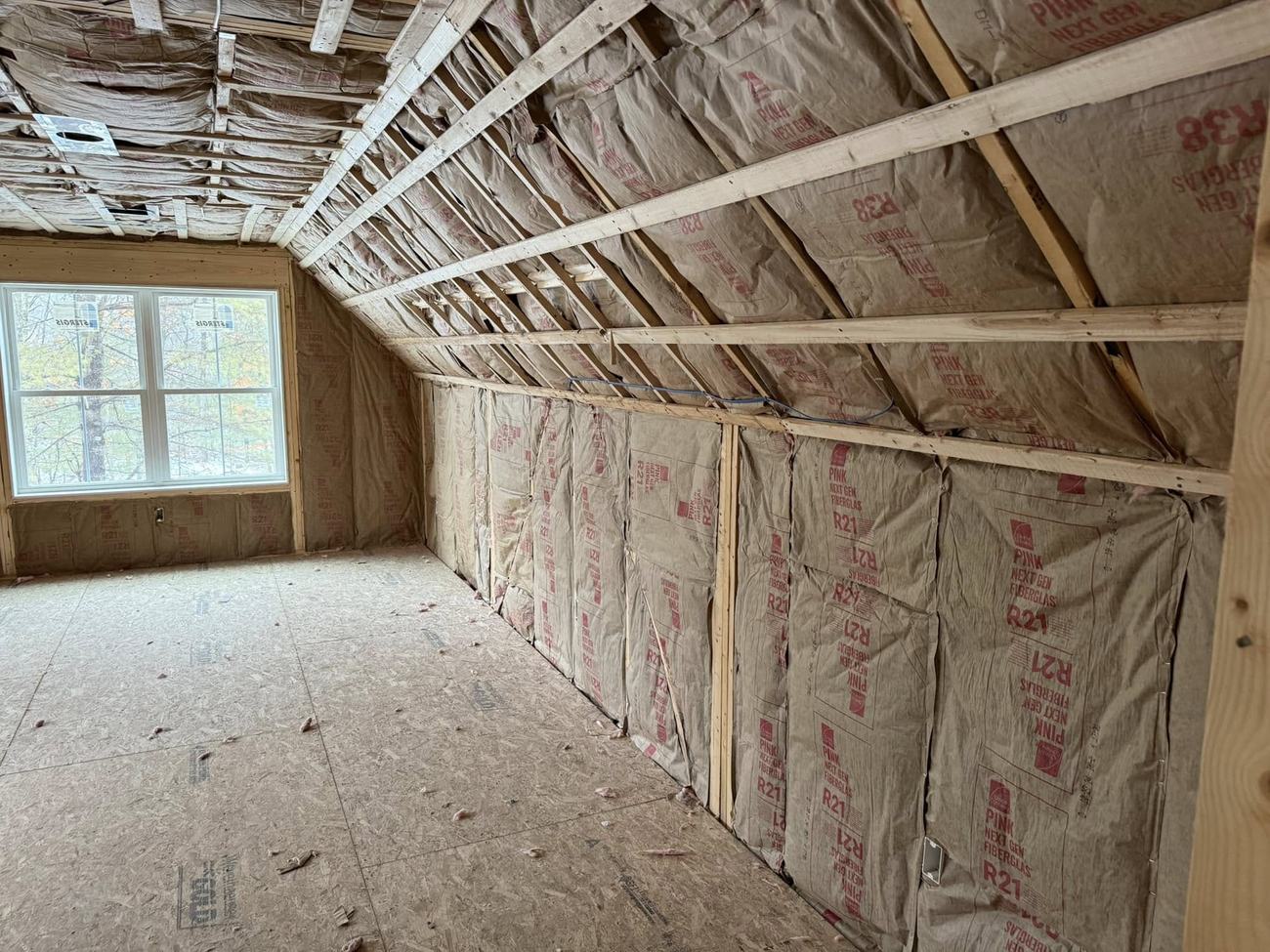
| Fiberglass batt | Open framing — walls, floors, knee walls | Fast and precise in new construction and gut jobs | R-13 – R-38 |
| Closed-cell spray foam | Rim joists, cathedral ceilings, foundation walls, crawls | Insulates and air-seals at once; resists moisture; adds stiffness | ≈ R-6.5 per inch |
| Open-cell spray foam | Interior walls, roof decks, sound assemblies | Air-sealing and sound control at a lower cost per board foot | ≈ R-3.7 per inch |
| Cellulose | Dense-packed walls, attics on older houses | Packs tight into closed cavities from the outside | R-13 – R-49 |
| Fireproofing | Commercial and multi-family structure | Rated protection where the drawings and code call for it | Per assembly |
Six places a New England house loses its heat
Most houses we look at are missing two or three of these. Fixing the attic alone gets you most of the way; fixing all six is what makes a house feel different.
The attic
The biggest, cheapest win in almost every house. Air-seal the ceiling plane first, baffle the eaves, then blow to R-49 or R-60.
Exterior walls
Dense-packed from the outside on a finished house; batt or foam when the framing's open. R-13 to R-21 depending on 2×4 or 2×6.
Rim joists
The band of framing at the top of the foundation. Small area, enormous leak. Closed-cell foam, every time.
Floors over cold space
Over a garage, a crawl or a bulkheaded cellar. R-30, held tight to the subfloor so it doesn't droop out of the bays.
Basement & crawl walls
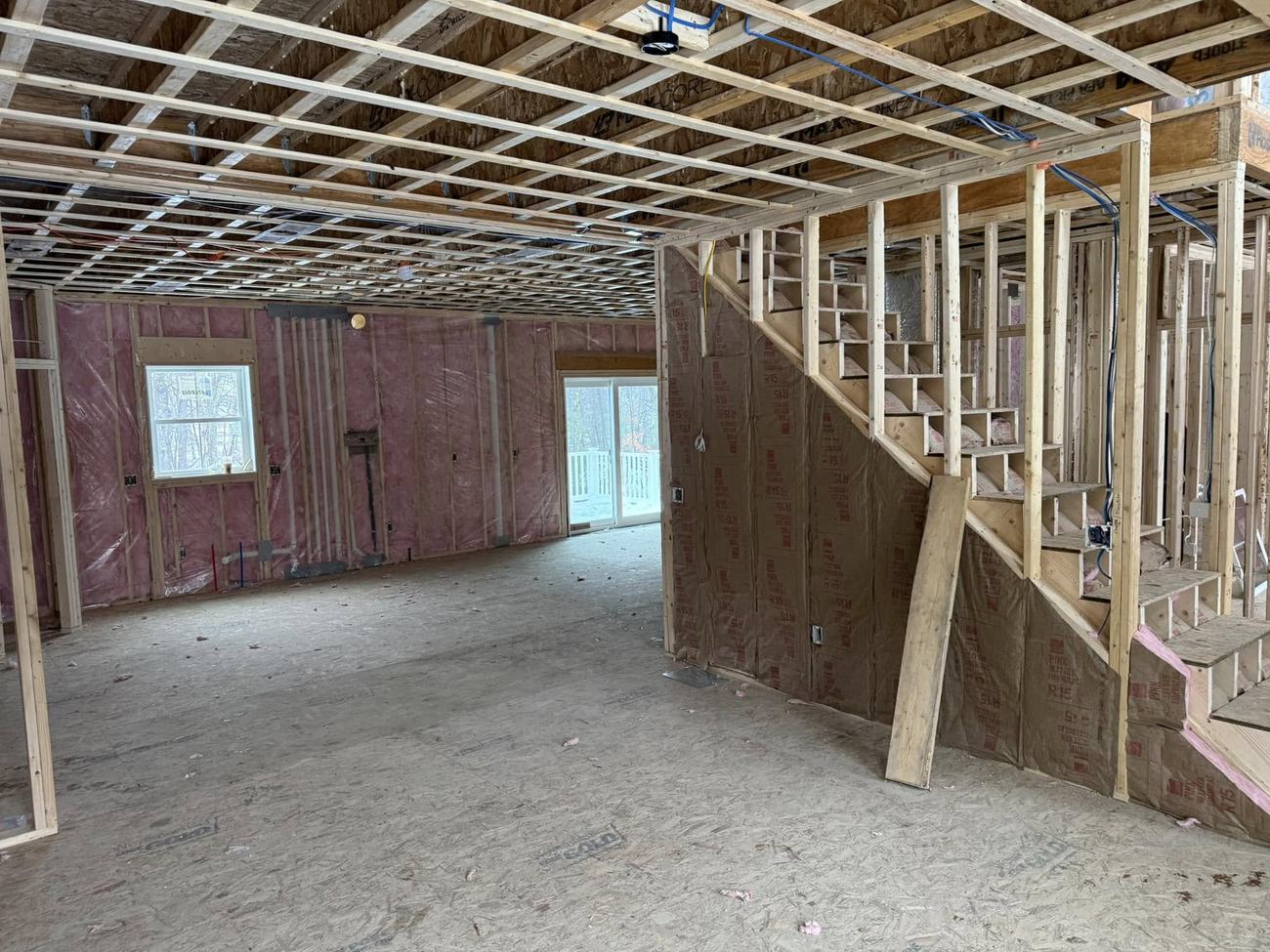
R-15 continuous or R-19 batt per ENERGY STAR. In a damp Rhode Island cellar we usually go closed-cell instead.
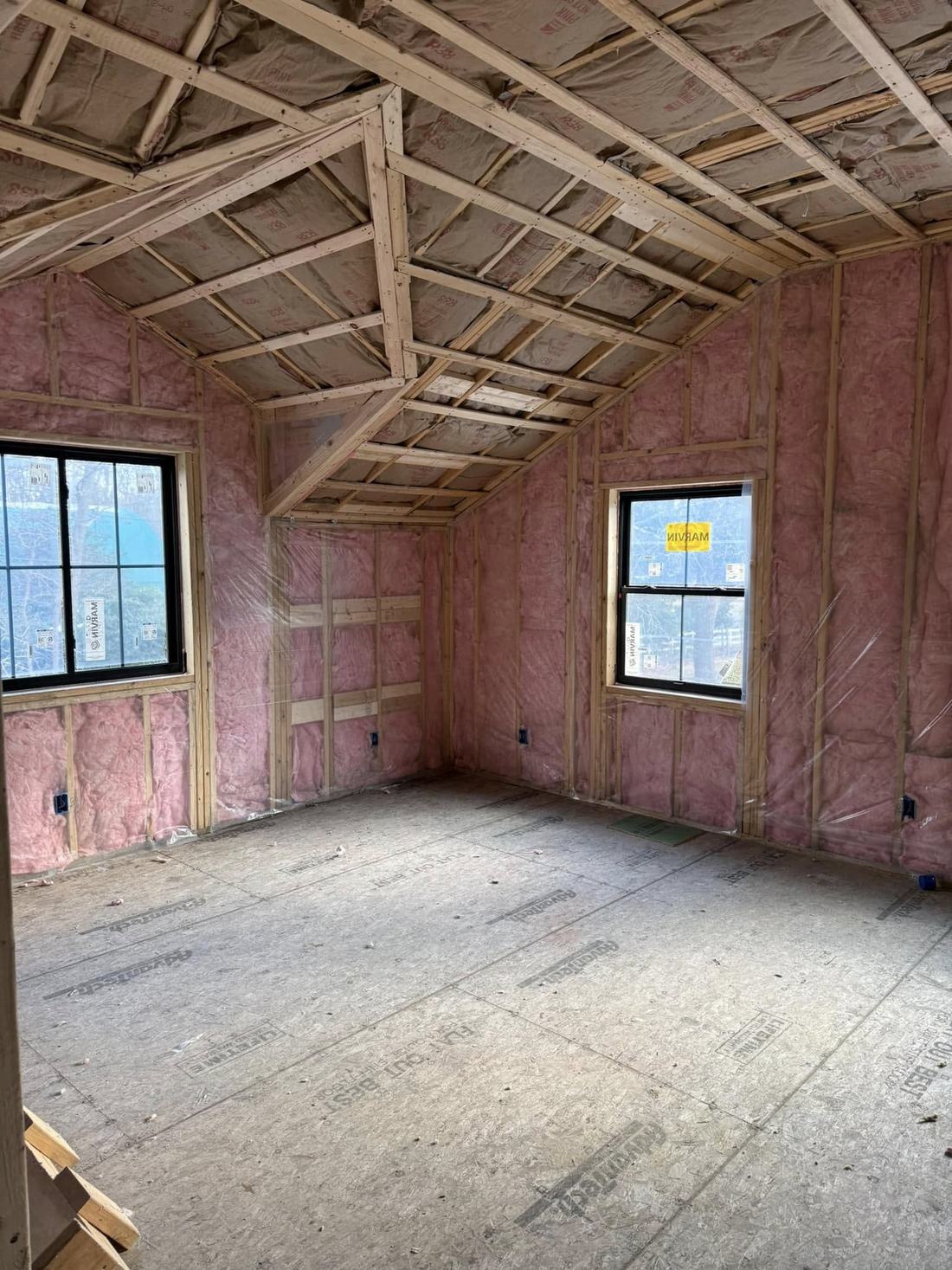
Knee walls & bonus rooms
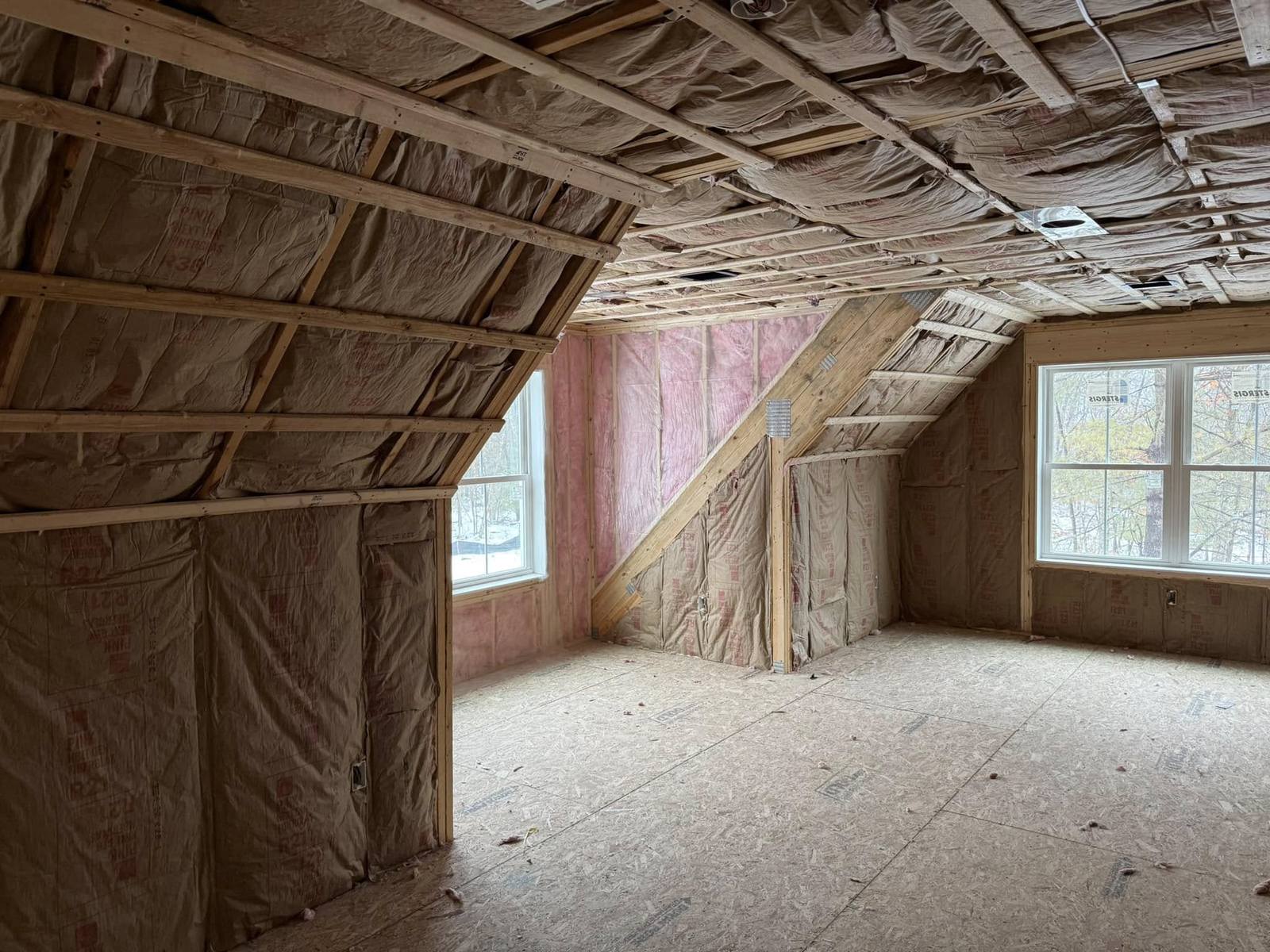
The room over the garage that's never the right temperature. Usually an air-sealing problem behind the knee wall, not a lack of R.
Air first. Then R-value.
You can bury an attic in twenty inches of fiberglass and still have a cold house, because insulation slows heat — it doesn't stop air. Air-sealing first is the difference between an installation that tests out and one that just looks thick.
- Seal the ceiling plane. Top plates, chases, wire and pipe penetrations, the attic hatch, recessed cans. This is the part nobody sees and everybody skips.
- Baffle the eaves. Keep the soffit vents breathing so the roof deck stays cold and dry — which is also how you keep ice dams off the gutters.
- Install to the manufacturer's spec. Correct depth, no compression, no gaps at the ends of the bays. Certified means we install it the way it was tested.
- Mark the depth. Rulers left in the attic so you — or a home inspector three years from now — can see exactly what's up there.
- Clean up. Bags out, floors vacuumed, driveway swept. It should look like we were never in the house.
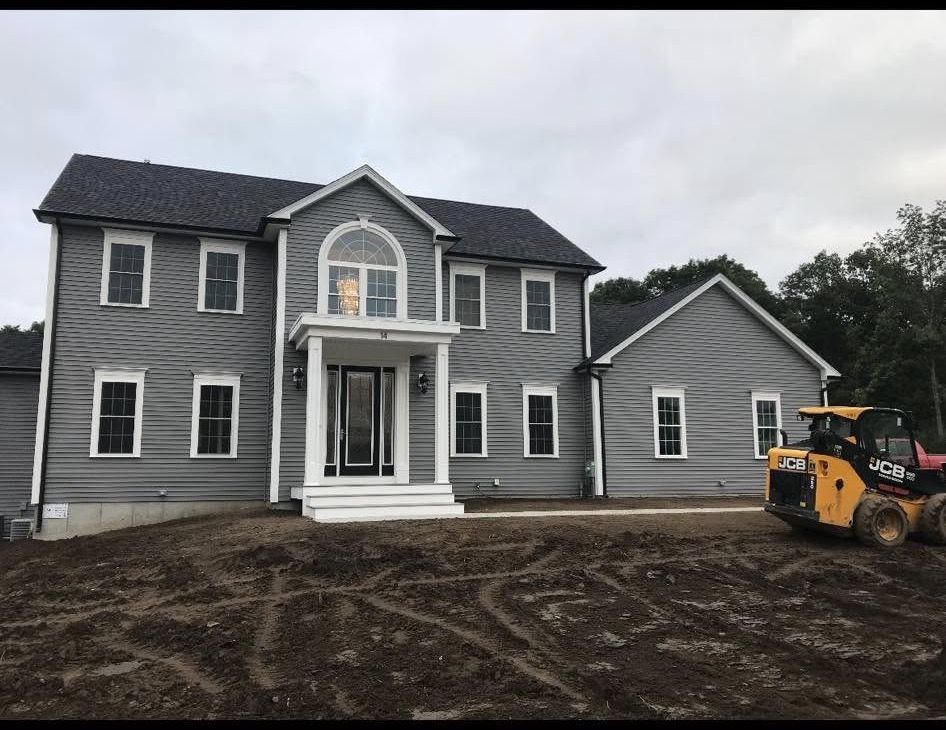
Jobs off our own trucks
What homeowners ask us first
Spray foam or fiberglass — which one do I need?
It depends on the assembly, not on which product is "better." Open attic floors are usually blown fiberglass — you can reach R-60 cheaply and add to it later. Rim joists, cathedral ceilings and damp foundation walls are usually closed-cell foam, because it air-seals and handles moisture at the same time. Open framing on a new build is often batt.
We'll spec what the assembly needs and tell you why. If foam isn't worth it on your job, we'll say so.
Do I have to remove my old insulation first?
Usually not. If what's up there is dry, rodent-free and evenly laid, we air-seal the ceiling plane and blow right over it. It comes out when it's wet, contaminated, or hiding air leaks or knob-and-tube wiring we need to get at.
How long does an attic job take?
Most single-family attics are a one-day job — air sealing in the morning, insulation in the afternoon, cleanup before we leave. Larger houses, full gut jobs and spray foam work can run two or three days.
Do you do commercial fireproofing?
Yes. Alongside thermal and acoustic insulation for commercial and multi-family buildings, we install fireproofing where the drawings and code call for it. Send us the spec section and we'll price it.
Are there rebates for insulation in Rhode Island?
Rhode Island Energy runs the EnergyWise program, which includes a no-cost home energy assessment (888-633-7947) — that assessment is the front door to the state's weatherization incentives. Book it, bring us what it finds, and we'll price the work.
Note that the federal 25C energy-efficiency tax credit for insulation ended for work placed in service after December 31, 2025, so the state programs are where to look now.
Find out what your attic is costing you.
Free estimate, no pressure, and a straight answer about whether the work is worth doing.
Owens Corning® Certified Energy Experts® · Serving RI, MA & CT · Free, timely estimates