
Seamless gutters, rolled in your driveway.
We measure and form every run on site, so it fits the shapes and curves your house actually has — in the color, profile and detail you pick.
One piece of aluminum, end to end
A sectional gutter is stock lengths joined every ten feet — and every joint is a future leak. A seamless gutter is rolled to length off a coil at your house, so a 42-foot run is one continuous piece with joints only at the corners and outlets.
| What you choose | Options | When it matters |
|---|---|---|
| Gutter size | 5" or 6" K-style, formed on site | Big roof areas, steep pitches and valleys that dump to one corner want the 6" |
| Downspouts | 2×3 or 3×4, placed to suit the grade | Where the water goes once it is off the roof — away from the foundation |
| Color | Full range of factory aluminum colors | Blend into the trim, or use the gutter as a deliberate accent line |
| Miters & corners | Custom miters cut and sealed on site | Bays, bumpouts, turrets and anything the house does that stock parts do not |
| Collection boxes | Decorative leader heads and boxes | Front elevations where the drainage should look like it was designed |
| Protection | Perforated screens and guard systems | Under pines, maples and anything that drops needles or seed |
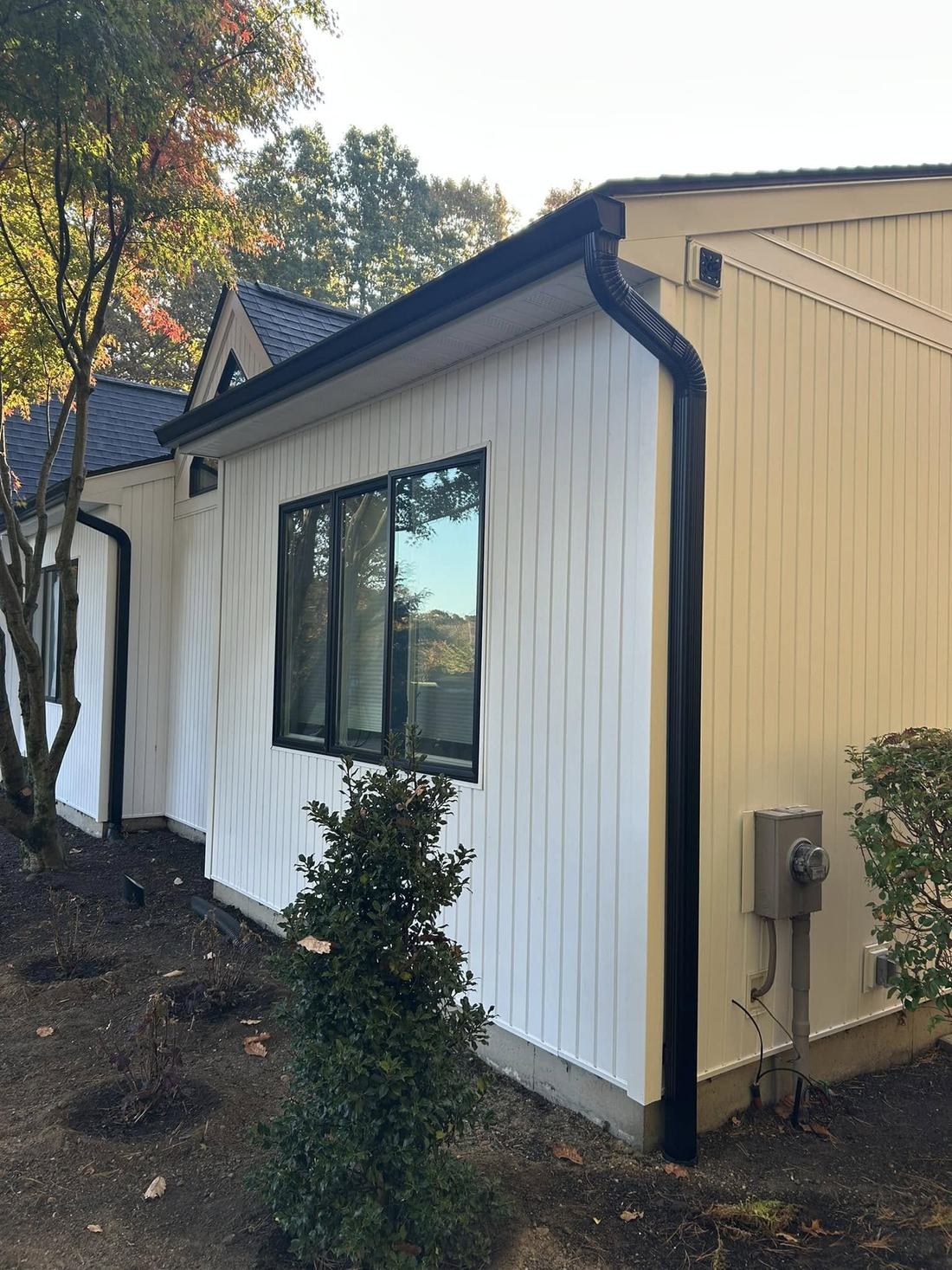
The house decides the gutter, not the truck.
Rolling on site is not a gimmick — it is the only way to fit gutter to a house that has bays, curves, mismatched fascia heights and a hundred years of settling in it.
- Fewer seams, fewer leaks. Joints only where the roof turns a corner, not every ten feet down a straight run.
- Measured cold, formed to fit. We measure your fascia, then roll to that number. No stretching stock lengths to cover the gap.
- Pitched to the outlet. A gutter that holds water is a gutter that grows mosquitoes and pulls away from the fascia. Pitch is set by hand.
- Hung on hidden hangers. Screwed into the fascia, not spiked through the front lip where the holes eventually leak.
- New construction or retrofit. We work with builders on new drainage and with homeowners on whatever is already in the ground.
Keep the trough moving water, not holding compost
A clogged gutter overflows behind the fascia, rots the board, and dumps water at the foundation — the three most expensive things a gutter can do.
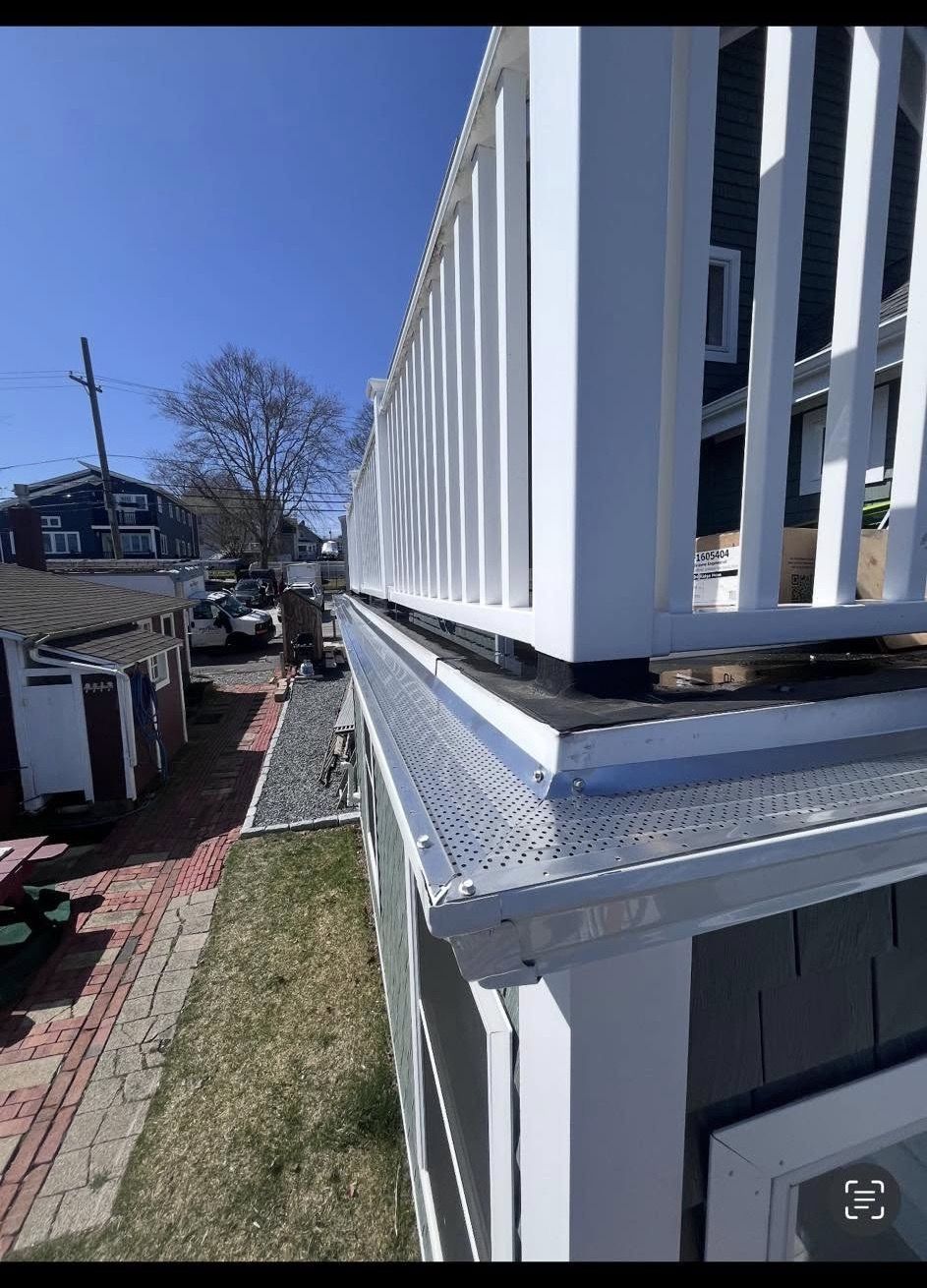 Screens
Perforated guards
Aluminum screens fastened over the trough so needles, leaves and seed pods wash off instead of settling in. Sized to the gutter, not clipped on as an afterthought.
Clogs and overflow
- Water spilling behind the gutter into the fascia
- Rot in the fascia board and soffit
- Runoff dumping at the foundation instead of away from it
- Twice-a-year ladder work in November and April
No guard is maintenance-free
Anyone who tells you a screen means you never look at your gutters again is selling something. A good guard turns a twice-a-year ladder job into an occasional rinse — that is the honest version, and it is still worth it under pines.
Ice dams: it starts in the attic, not the gutter
Every February someone calls us about the ice hanging off their gutters. The gutter is the symptom. Here is the actual chain of events — and why being an insulation contractor and a gutter contractor at the same time matters.
Heat leaks up
Warm air escapes through gaps in the ceiling plane into the attic — around lights, chases and the hatch.
The deck warms
That heat warms the underside of the roof deck, and the snow sitting on it starts to melt from below.
Water hits the cold eave
The meltwater runs down to the overhang, which is not heated from below, and re-freezes into a ridge of ice.
It backs up under the shingles
The dam holds the next round of meltwater against the roof until it finds its way in — usually over a bedroom ceiling.
The fix works both ends: air-seal and insulate the ceiling plane so the deck stays cold, keep the soffit vents breathing, and use gutter and drainage details that keep water moving. We do both trades, so you get one answer instead of an insulation contractor and a gutter contractor pointing at each other. See how we insulate →
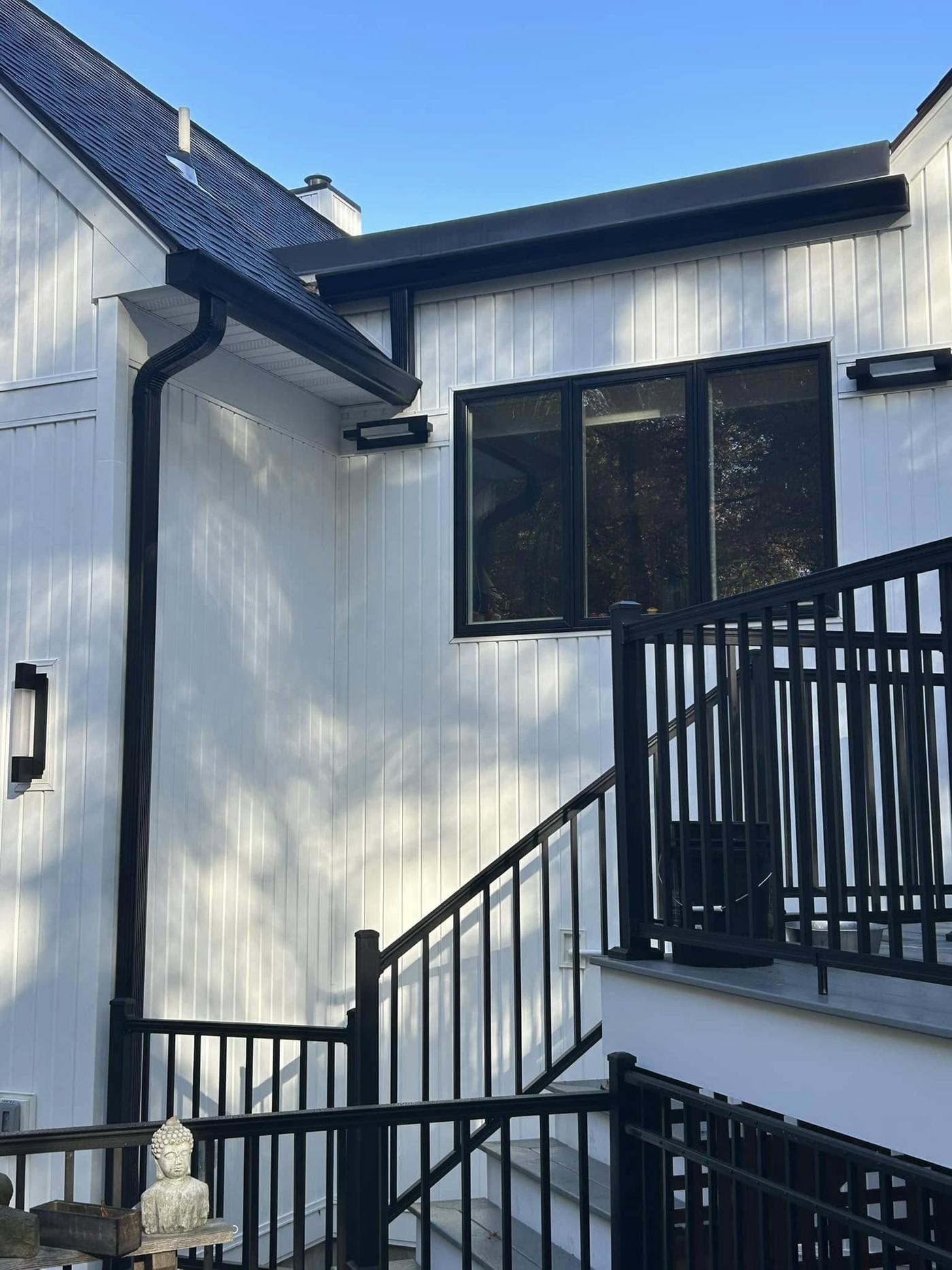
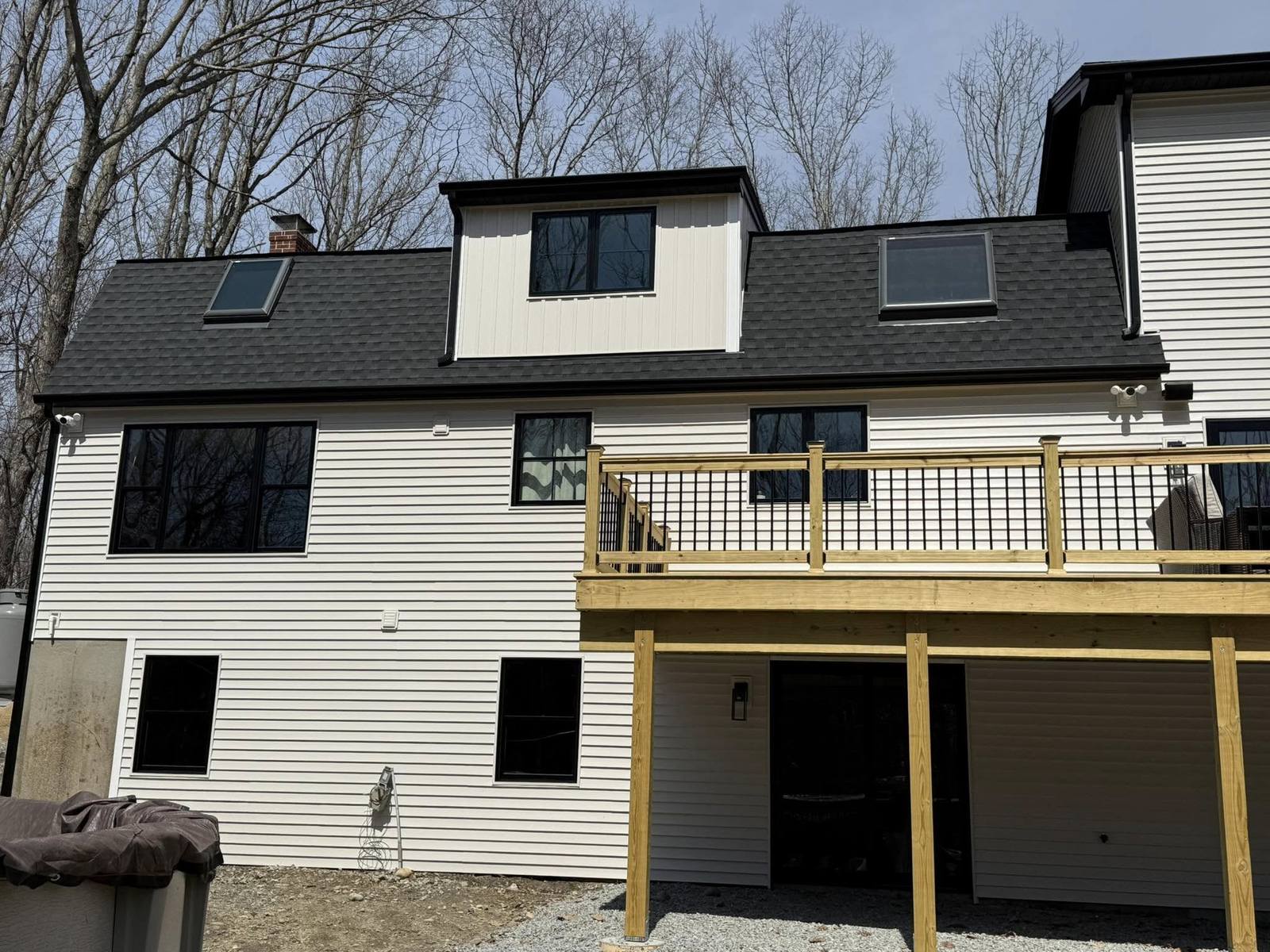
Gutter jobs around Rhode Island
What people ask before they book
What size gutter does my house need?
Most Rhode Island houses are fine on a 5" K-style gutter with 2×3 downspouts. Steep roofs, large roof areas draining to one run, and valleys that dump into a single corner are the cases where we move up to a 6" gutter with 3×4 downspouts.
It is a drainage calculation, not a preference — we work it out on site.
Are gutter guards actually worth it?
Under pines and maples, yes. A screen keeps needles and leaf litter out of the trough so the gutter keeps moving water. No guard is truly no-maintenance — but a good one turns a twice-a-year ladder job into an occasional rinse.
Can you match the color of my trim?
Yes. Seamless aluminum comes in a wide range of factory colors, so the gutter can disappear into the trim or be used deliberately as an accent. Custom miters and collection boxes are there when you want the drainage to look designed rather than hidden.
Do you install gutters in winter?
We work year round, weather permitting. Aluminum forms fine in the cold; what stops us is ice on the roof and unsafe footing. If your gutters let go in a February thaw, call and we will come look.
Do you do commercial buildings?
Yes — we install gutters on both residential and commercial buildings, and we work with builders on new construction to get the drainage right the first time rather than retrofitting around a finished grade.
Gutters overflowing? Let's look at it.
Free estimate on seamless gutters, guards or a full replacement — measured and formed at your house.
Owens Corning® Certified Energy Experts® · RI Builders Association member · Serving RI, MA & CT · Free, timely estimates